


Originally published: The Active Age, 28 February 2023
SURVEY BY LIFEBUOY AND DOCTOR ANYWHERE FIND MANY SINGAPOREANS PASSIVE ABOUT PREVENTIVE HEALTH, WITH A MAJORITY BEING REACTIVE WHEN IT COMES TO HEALTHCARE DESPITE BEING FULLY AWARE OF ITS IMPORTANCE.
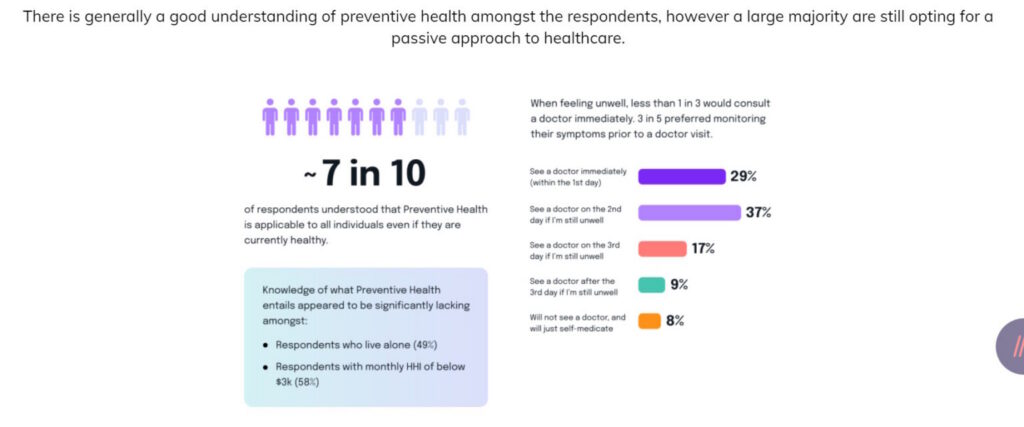
The study found at least 70 percent of respondents agree that preventive health applies to them. However, a majority of respondents are still opting for a passive approach to their healthcare.
Some key findings include:
- 60 percent have not scheduled a health screening in the last 12 months, despite its importance in early detection and prevention of the onset of chronic diseases
- Over 70 percent of respondents choose to consult a doctor only after being unwell for two days
- At least 30 percent of respondents associated having no symptoms with good health
The study sought to understand the behaviour associated with not scheduling health screenings, with respondents sharing the following reasons:
- Having to deal with long queues at clinics (45 percent)
- Symptoms will improve over time (43 percent)
- Rising healthcare costs (34 precent)
- Other reasons include: Hectic work schedules, rising healthcare costs, fears around finding out from test results that they have an illness.
The approach to preventive health should take the form of inculcating a systematic mindset that reinforces regular maintenance – achieved through comprehensive education and a nationwide, long-term healthcare strategy.
Khim Poh Yin, Global Lead Lifebuoy, Unilever.
Can telehealth services be the solution for preventive healthcare?
Around 60 percent of respondents showed support towards online consultations and their role in the healthcare ecosystem.
However, there is still an action gap among Singaporeans – of the majority who expressed an awareness of teleconsulting services, nearly half of them have never tried it. This was largely attributed to their reference for in-person consults (75 percent), in addition to cynicism around the perceived efficacy of seeing a doctor online (56 percent).
Additionally, over 4 in 10 were unsure on how to engage in tele-consulting services.
Among respondents that have used telehealth services before, the benefits of tele-consulting included convenience (51 percent) and time saving (49 percent) and were identified as key reasons for adopting this behaviour.