


By: Tom de Vogel, Business Development Manager – Mainland Europe
Travel plans and holiday destinations are evolving as European consumers rethink how and where they book their next break. But what is shaping upcoming trips, where are travellers seeking inspiration, and which experiences and factors influence their choices?
To understand these shifts, Pureprofile surveyed 600 consumers across Germany and the Netherlands. Alongside this survey, we analysed social conversations about travel over the past 12 months to uncover the motivations and cultural signals shaping travel inspiration and discovery through the holiday booking journey.
Shared perspectives shaping travel inspiration
Dutch and German travellers begin their holiday journeys with several shared perspectives. A key similarity is their interest in discovering hidden gems and adventures either domestically or within Europe, although their approaches may differ.
Domestic and European trips remain the foundation of travel plans. European travel leads in both markets:
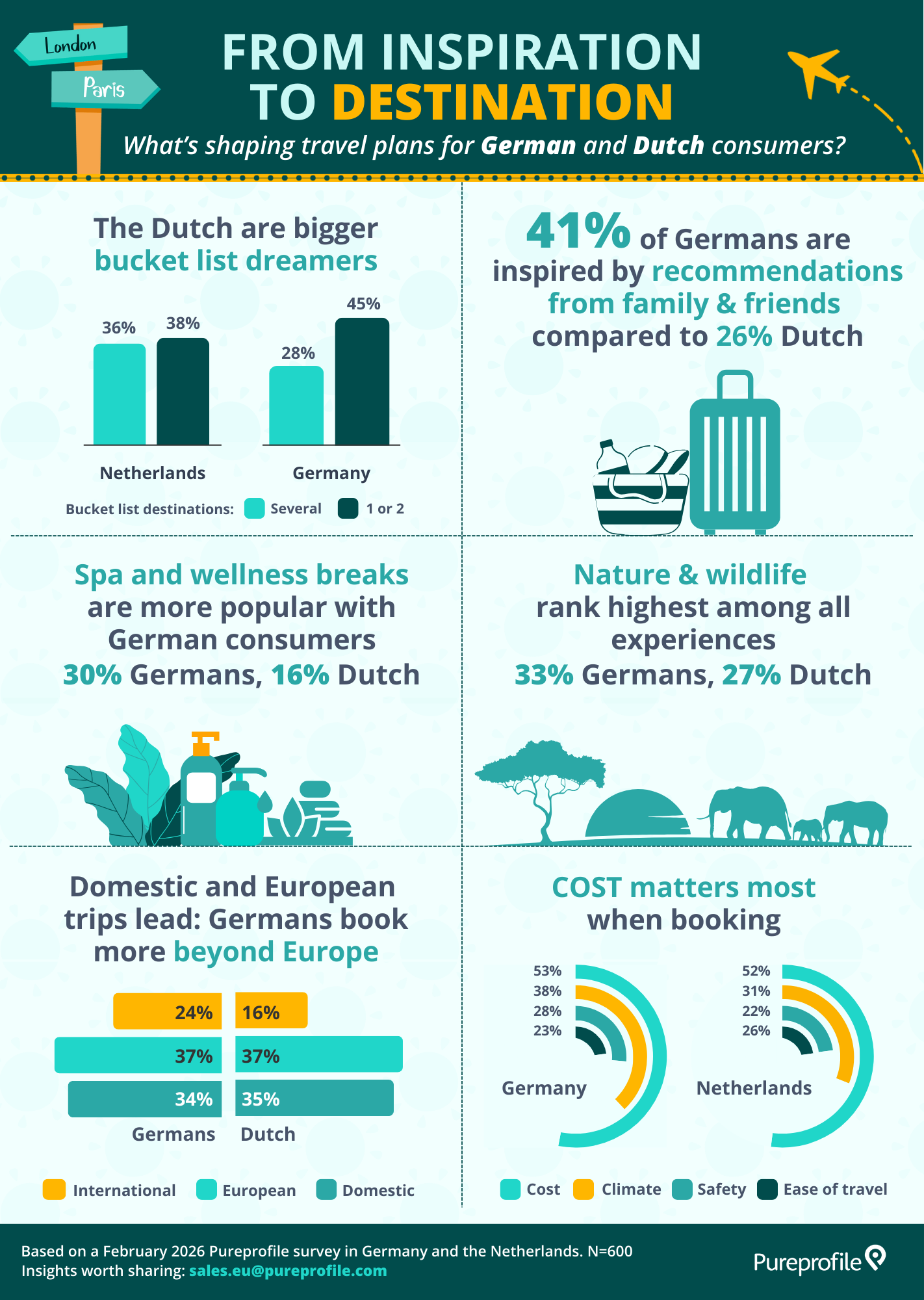
37% of German and Dutch travellers are planning trips within Europe, while 34% of Germans and 35% of Dutch travellers choose domestic travel.
International travel beyond Europe still plays a role, but at lower levels: 24% of Germans and 16% of Dutch travellers are planning international trips. Social insights also reveal a growing interest among Dutch travellers in emerging destinations across Eastern Europe and the Balkans, where travellers can explore new cultures and experiences away from crowded tourist hotspots.
Travel inspiration also reflects subtle cultural differences. 41% of German travellers say recommendations from family and friends inspire their travel plans, compared with 26% of Dutch travellers, suggesting Germans place greater value on trusted personal advice when choosing destinations.
At the same time, both markets show strong interest in aspirational travel planning. The Dutch stand out as larger ‘bucket list’ dreamers: 36% of Dutch people surveyed say they have several bucket list destinations compared with 28% of Germans.
Two traveller mindsets: adventure vs restoration
While their inspiration may overlap, Dutch and German travellers approach holidays with distinct motivations. Across both countries, nature and wildlife experiences rank among the most appealing travel activities: 33% of Germans and 27% of Dutch travellers say nature and wildlife experiences influence their destination choice. This aligns with broader social conversations highlighting growing interest in outdoor escapes, national parks and nature-based tourism as travellers seek a break from busy daily life.
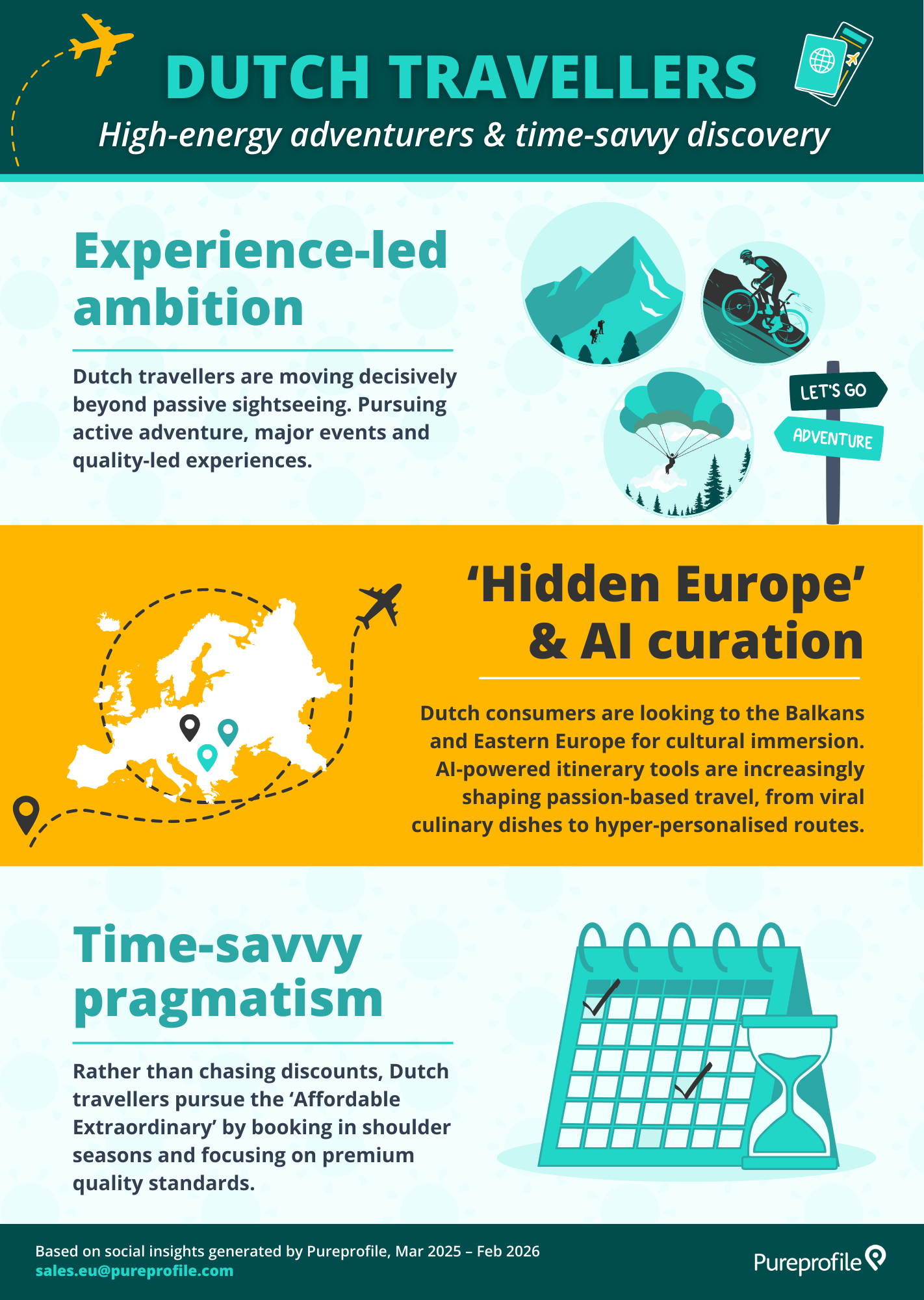
Dutch travellers are increasingly drawn to active, high-energy travel experiences. Social insights show growing enthusiasm for adventure tourism, sporting activities and major events, reflecting a desire to move beyond traditional sightseeing. This ambition also appears in travel planning behaviours. Dutch travellers often prioritise quality experiences and memorable activities, seeking trips that deliver excitement and discovery.
Social conversations also show that Dutch travellers frequently use AI-powered travel tools and itinerary planning platforms to discover unique routes, restaurants and experiences tailored to their interests.
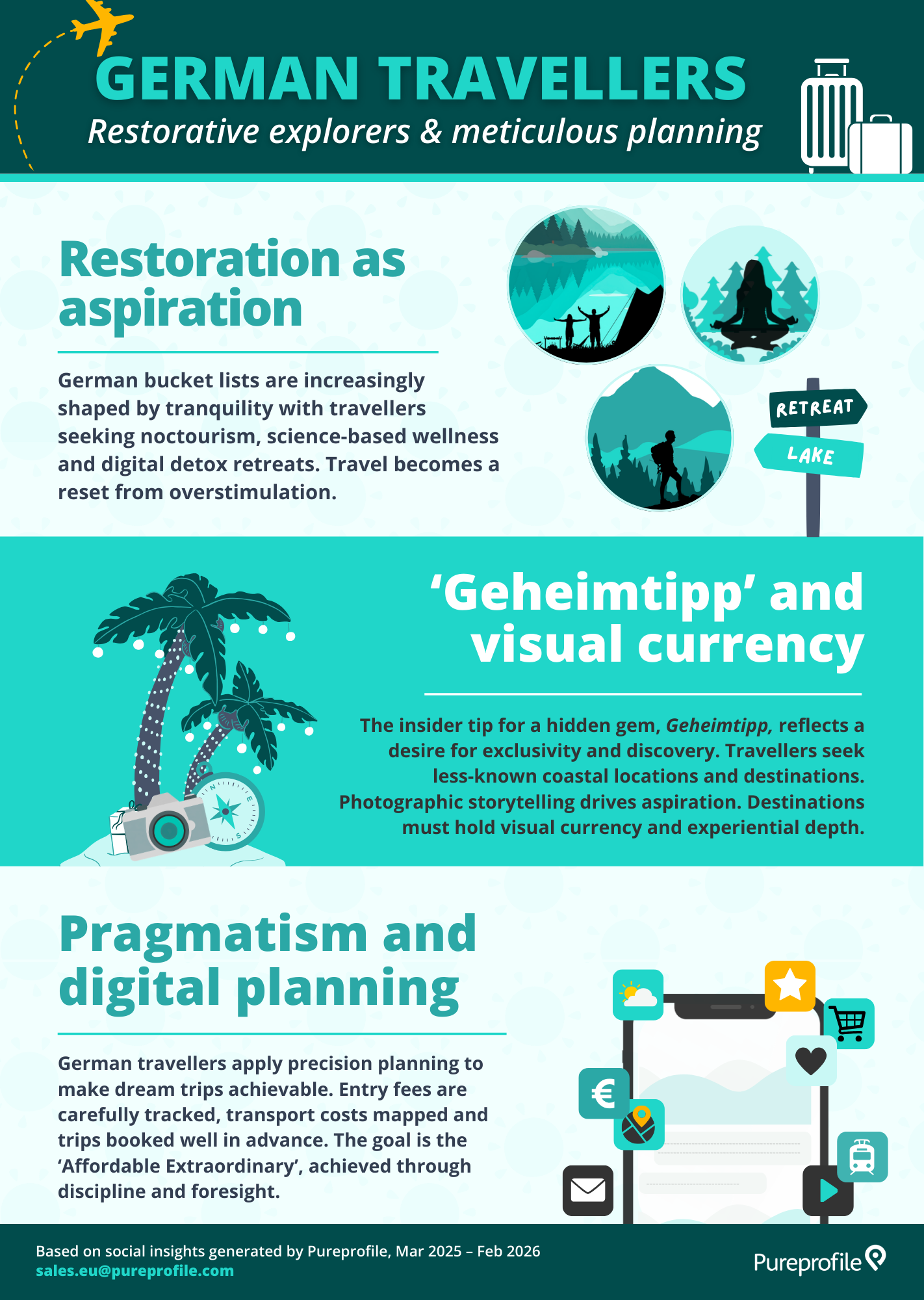
German travellers, meanwhile, increasingly view travel as an opportunity for restoration and balance. With spa and wellness holidays proving to be significantly more popular: 30% of Germans say spa and wellness experiences would influence their destination choice compared with 16% of Dutch travellers.
Social insights reinforce this trend, with conversations around digital detox retreats, wellness tourism and tranquil nature escapes becoming increasingly common among German consumers. Many travellers are seeking calm, scenic environments and lesser-known coastal or countryside locations where they can disconnect from everyday pressures and reset mentally, reflecting a growing desire for authenticity and tranquillity.
Rediscovering Europe and its hidden gems
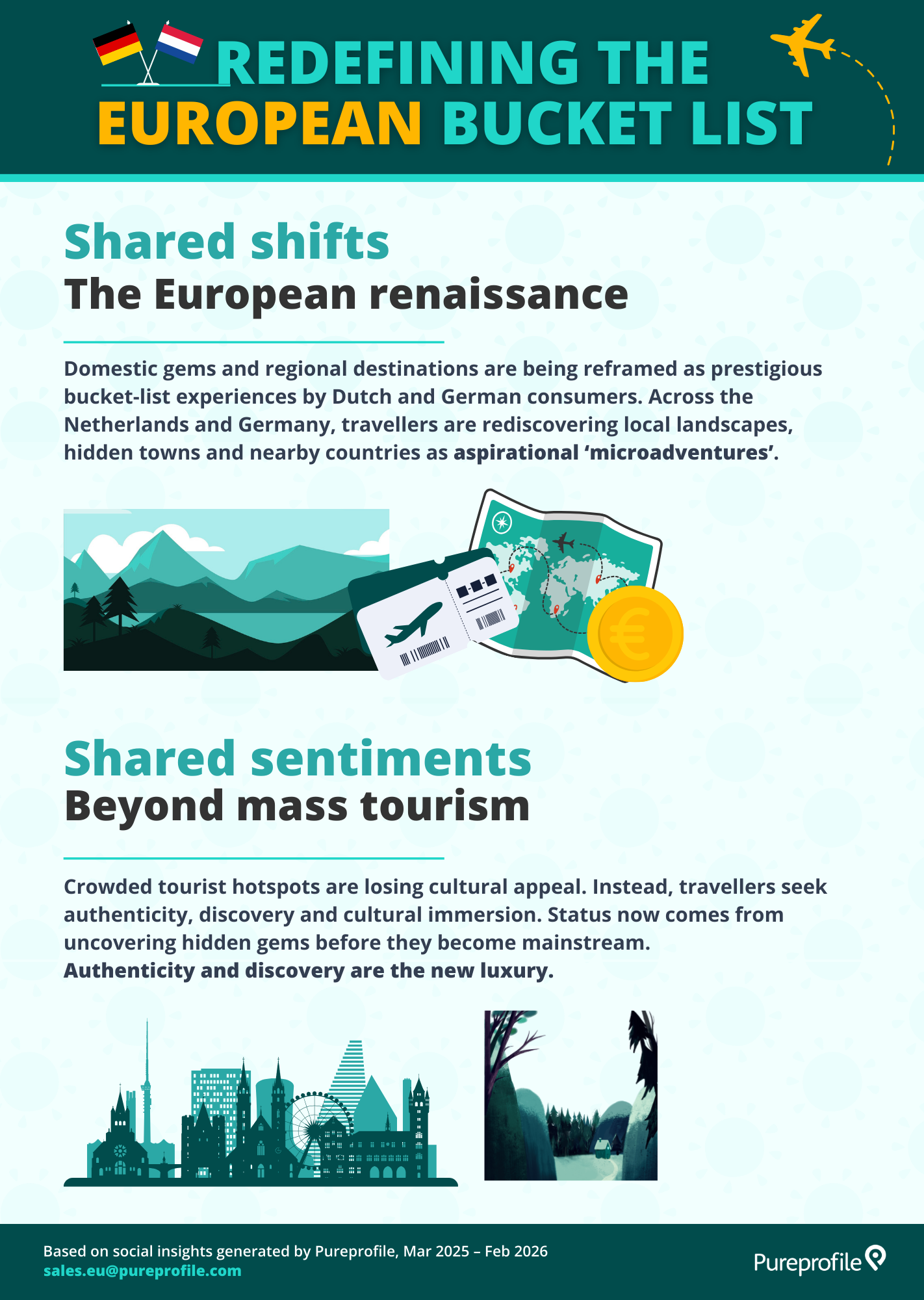
A theme that connects both markets is the rediscovery of Europe itself. Social insights show growing enthusiasm for regional destinations, hidden towns and lesser-known cultural sites as travellers move away from overcrowded tourist hotspots. The idea of the European ‘microadventure’ is gaining traction, where travellers explore nearby destinations that offer unique experiences without long-distance travel.
For Dutch travellers, this often means seeking emerging destinations and cultural immersion, particularly in parts of Eastern Europe. Social discussions frequently highlight food culture, festivals and outdoor adventure as key travel motivators.
German travellers share this curiosity for hidden destinations but approach it differently. The concept of the ‘Geheimtipp’, or insider tip, remains influential in travel conversations. Travellers actively search for destinations that feel authentic and undiscovered, often guided by visual inspiration and photography that showcase scenic landscapes and cultural richness.
In both countries, authenticity and discovery are increasingly valued, signalling a broader shift away from mass tourism towards more meaningful travel experiences.
Inspiration to destination: practical decision drivers
While inspiration fuels travel dreams, practical considerations ultimately shape booking decisions.
Across both markets, cost remains the most important factor when booking travel, influencing 53% of German travellers and 52% of Dutch travellers say cost is the ultimate decider when booking travel. However, travellers balance affordability with other priorities. Social insights confirm that Dutch travellers are not necessarily chasing the lowest price. Instead, many pursue what could be described as the ‘affordable extraordinary’, booking during shoulder seasons and prioritising quality experiences over discounts.
The second highest factor is Climate. 38% of Germans and 31% of Dutch travellers say climate influences their decisions when booking a holiday. Beyond cost and climate, travellers also prioritise practical considerations that make a trip straightforward and secure when booking their holidays.
- Safety: 28% German travellers and 22% Dutch
- Ease of travel: 26% Dutch travellers and 23% Germans
These practical considerations rank higher than traveller review and star ratings (15% in the Netherlands and 13% in Germany). This suggests that while reviews still play a role during the research stage, travellers ultimately prioritise destinations that feel safe, accessible and easy to navigate when making the final booking decision.
German travellers tend to approach booking with methodical planning, carefully mapping transport costs, entry fees and accommodation well in advance. Social insights show that many use digital tools to organise itineraries and track travel logistics.
Dutch travellers, in contrast, often prioritise flexibility and experience value, choosing destinations that offer memorable activities even if the planning process is less rigid.
Together, these survey and social conversation findings highlight how two neighbouring markets share common inspirations, while approaching travel in distinct ways. Both groups increasingly value nature, authenticity and meaningful experiences, and both are rediscovering Europe’s regional destinations and hidden gems. Yet their motivations differ: Dutch travellers pursue energetic discovery and unique experiences, while German travellers prioritise restorative escapes and careful planning.
For travel brands, tourism boards and hospitality providers, understanding these nuances is essential. The future of European travel will be shaped not just by where people go, but how they discover, plan and experience their journeys.
The infographic series below represents key findings from our research:
Based on a Pureprofile survey of 600 people in Germany and the Netherlands, February 2026. Social insights generated March 2025 – February 2026.
Share this infographic on your website

Tom de Vogel
Business Development Manager, Mainland Europe
Tom de Vogel is Business Development Manager at Pureprofile, working with organisations to help them harness research and data to support better decision-making. He partners with insight teams, researchers and business stakeholders to ensure research programmes and studies deliver meaningful, actionable insights that can be used across the organisation.
With more than a decade of experience across client, agency and supplier environments, Tom brings a well-rounded perspective on how research is commissioned, delivered and used within complex organisations. This enables him to act as a trusted partner to clients, helping them shape research approaches that are both methodologically robust and commercially relevant. His collaborative and pragmatic approach has helped him build trusted relationships with clients and partners across the industry.