


Investing is becoming increasingly mainstream across Southeast Asia. In the six markets we surveyed, 91% of consumers currently invest or plan to start within the next 12 months, while 50% expect to invest more over the coming year.
But the headline numbers hide a more interesting story. What people invest in, how much of their income they commit, whether they lean on a bank or a trading app, and how strongly they respond to Sharia-compliant products all vary sharply from one market to the next.
To understand these differences, we surveyed 1,200 consumers across Indonesia, Singapore, Malaysia, Thailand, the Philippines and Vietnam, in September 2026, with 200 respondents in each market.
Investing is widespread across the region
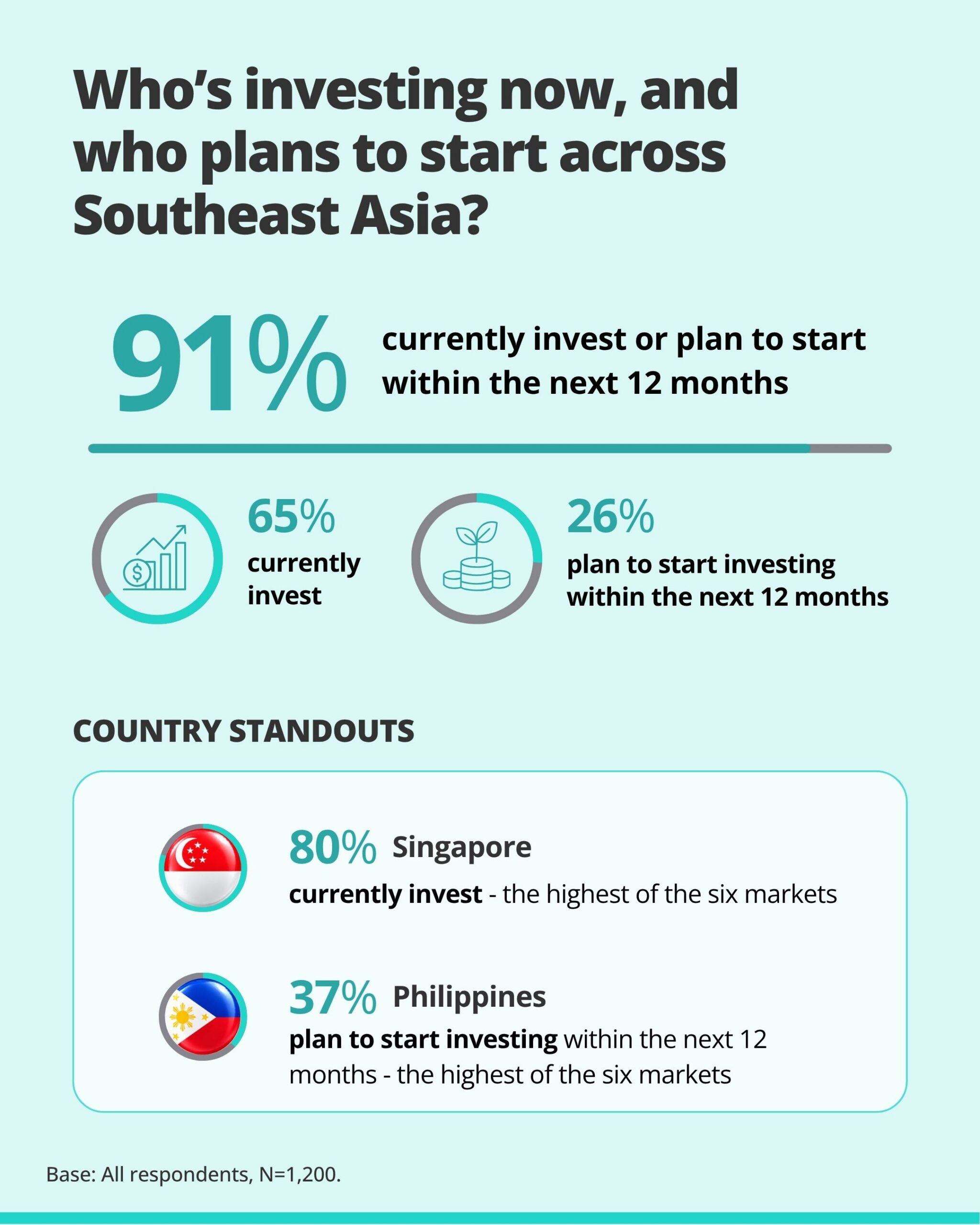
Across the six markets, 91% of consumers currently invest or plan to start within the next 12 months; 65% currently invest, while 26% plan to start.
Singapore leads, with 80% of consumers already investing, the highest of the six markets. The Philippines records the highest share of people planning to start, with 37% intending to start investing.
That points to a sizeable potential wave of first-time investors and an opportunity for brands to reach them as they enter the market.
Most people invest a modest but meaningful share
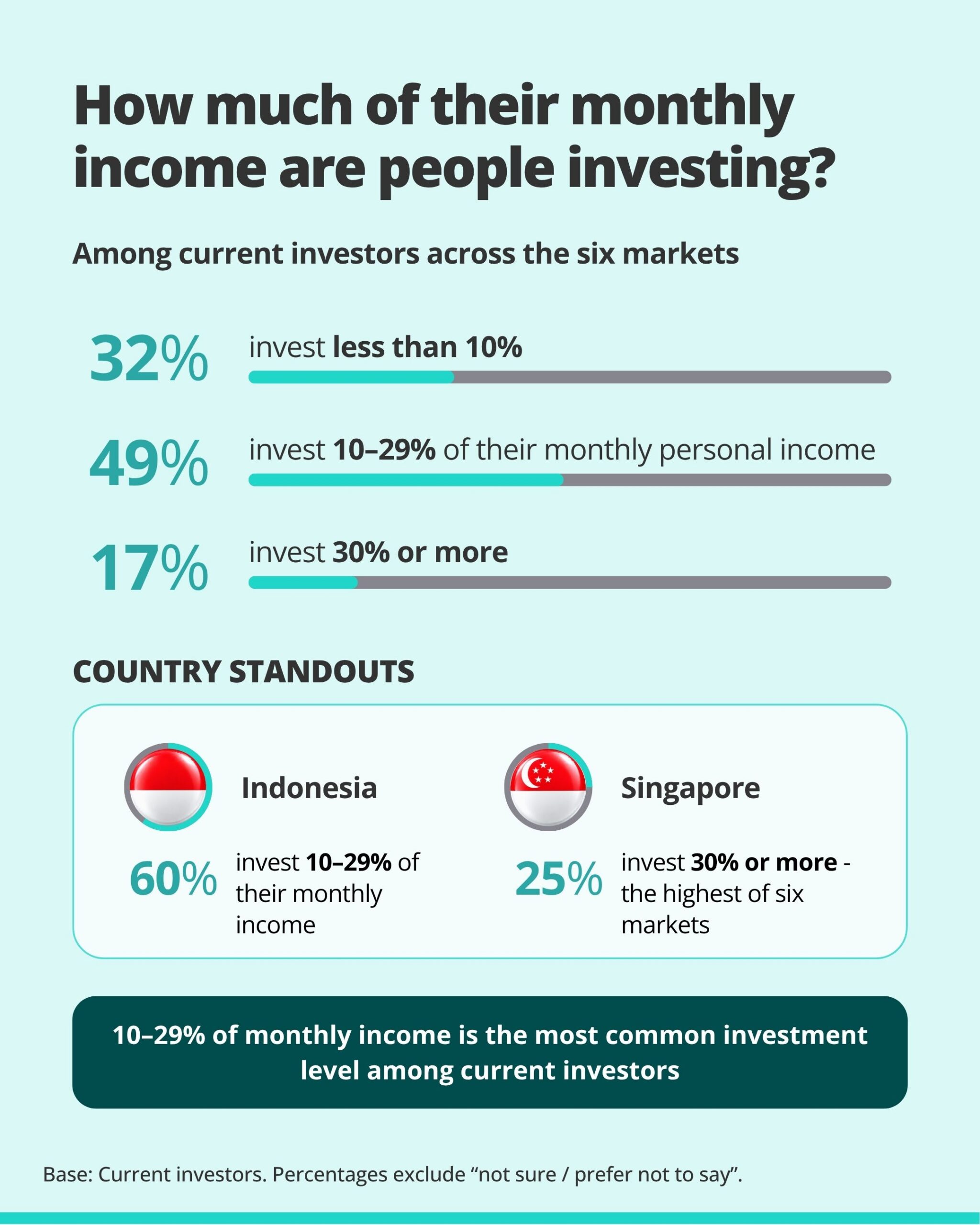
Among people who already invest, 49% invest 10%–29% of their monthly personal income, making this the dominant band across the region. 32% invest less than 10%, while 17% commit 30% or more.
Indonesia stands out for how concentrated its investors are in that middle band: 60% invest 10–29% of their monthly income. Singapore, meanwhile, has the highest share investing with 25% investing 30% or more of their monthly income.
What’s on investors’ radar varies by market
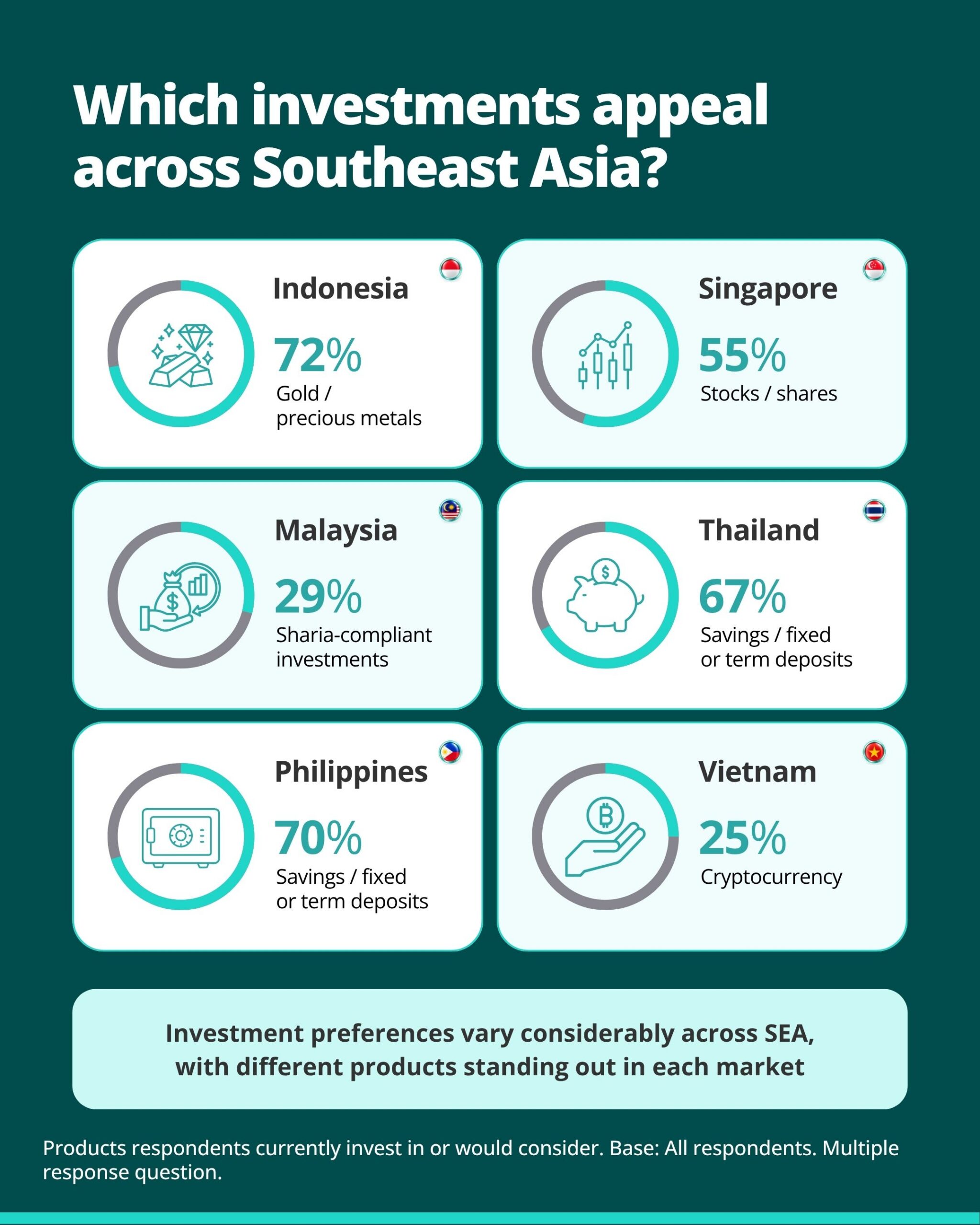
If there’s one clear message from the research, it’s that investment preferences are anything but uniform. Each market has its own standout:
- Indonesia: gold and precious metals (72%)
- Singapore: stocks and shares (55%)
- Malaysia: Sharia-compliant investments (29%)
- Thailand: savings and fixed or term deposits (67%)
- Philippines: savings and fixed or term deposits (70%)
- Vietnam: cryptocurrency (25%)
For financial institutions, it’s a clear reminder that a single regional product strategy won’t land the same way everywhere.
Apps lead in some markets, banks in others
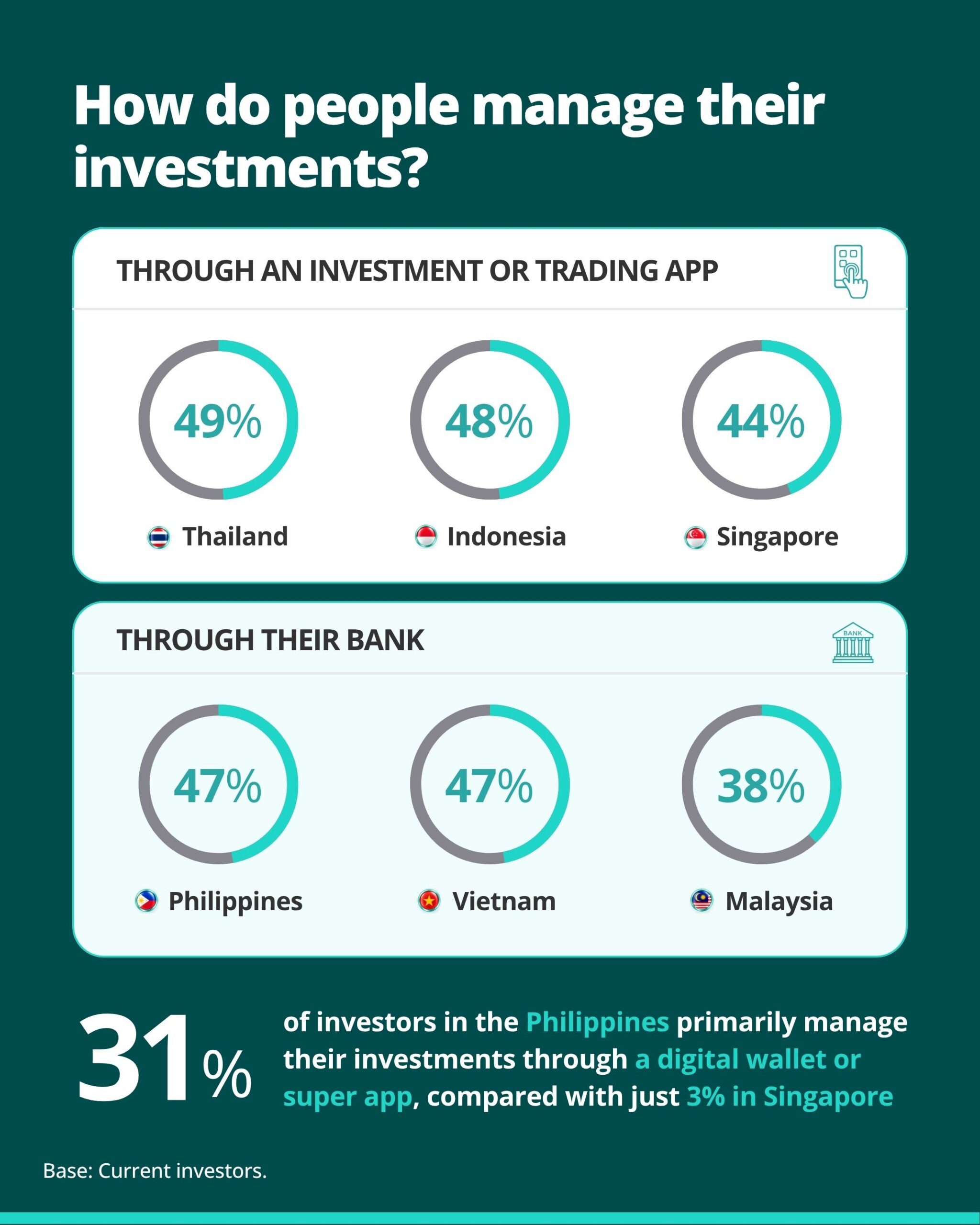
Where people turn to manage their investments varies as much as what they invest in. Investment and trading apps are the primary channel across the region’s digital-first markets, led by 49% of investors in Thailand, 48% in Indonesia and 44% in Singapore.
In the other three markets, people mainly turn to their bank: 47% in both the Philippines and Vietnam, and 38% in Malaysia.
The most striking contrast lies in the rise of digital wallets and super apps. 31% of investors in the Philippines primarily manage their investments through a digital wallet or super app, compared with just 3% in Singapore.
Investment momentum varies across the region
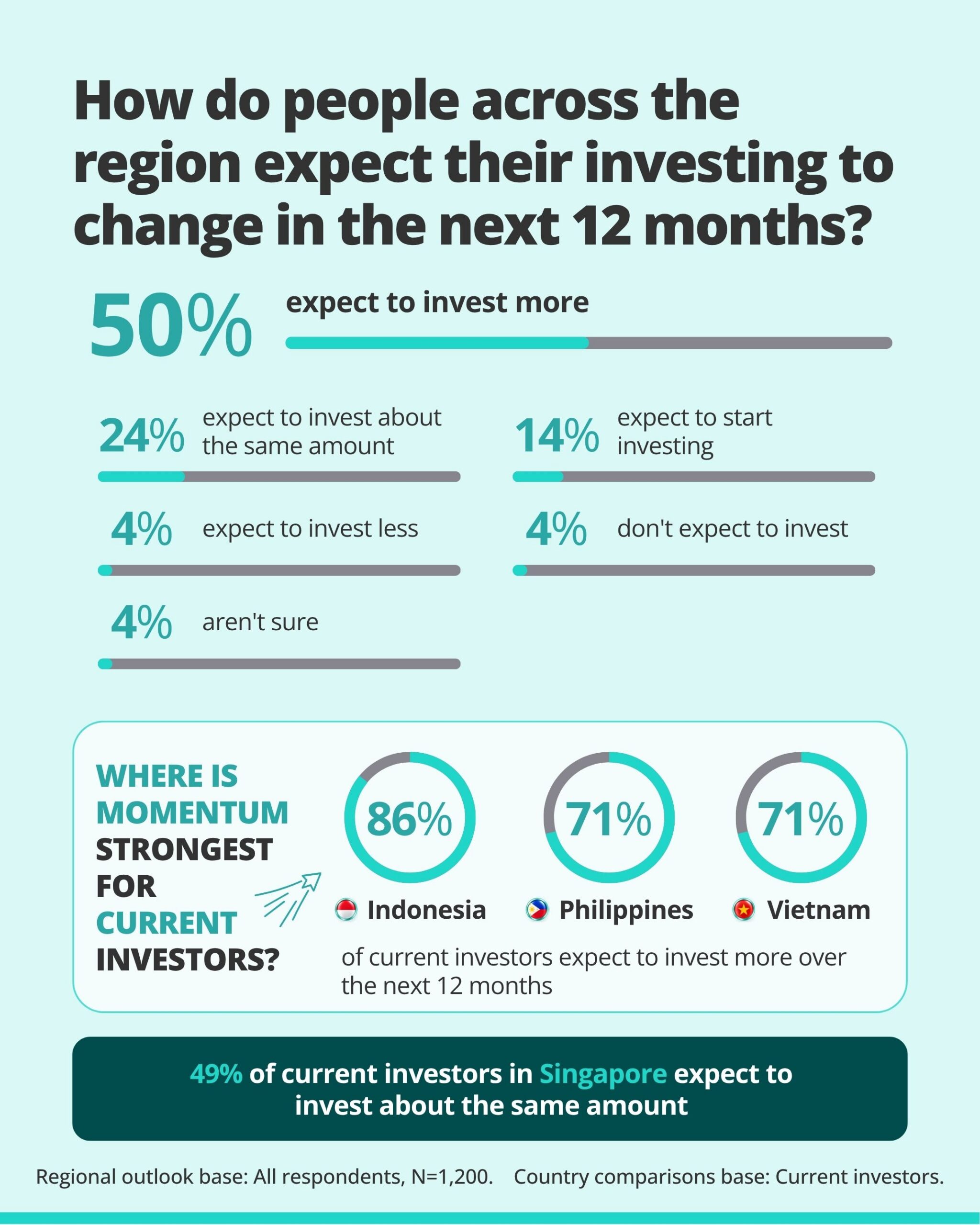
The regional outlook is positive. 50% expect to invest more over the next 12 months, while 24% expect to invest about the same and a further 14% expect to start investing. The remaining respondents are split evenly, with 4% each expecting to invest less, not expecting to invest, or unsure.
Investment momentum is strongest in Indonesia, where 86% of current investors expect to invest more over the coming year, followed by the Philippines and Vietnam at 71%.
In Singapore, by contrast, 49% of current investors plan to maintain their current levels rather than increase them.
Strong Sharia-compliant appetite in Indonesia and Malaysia
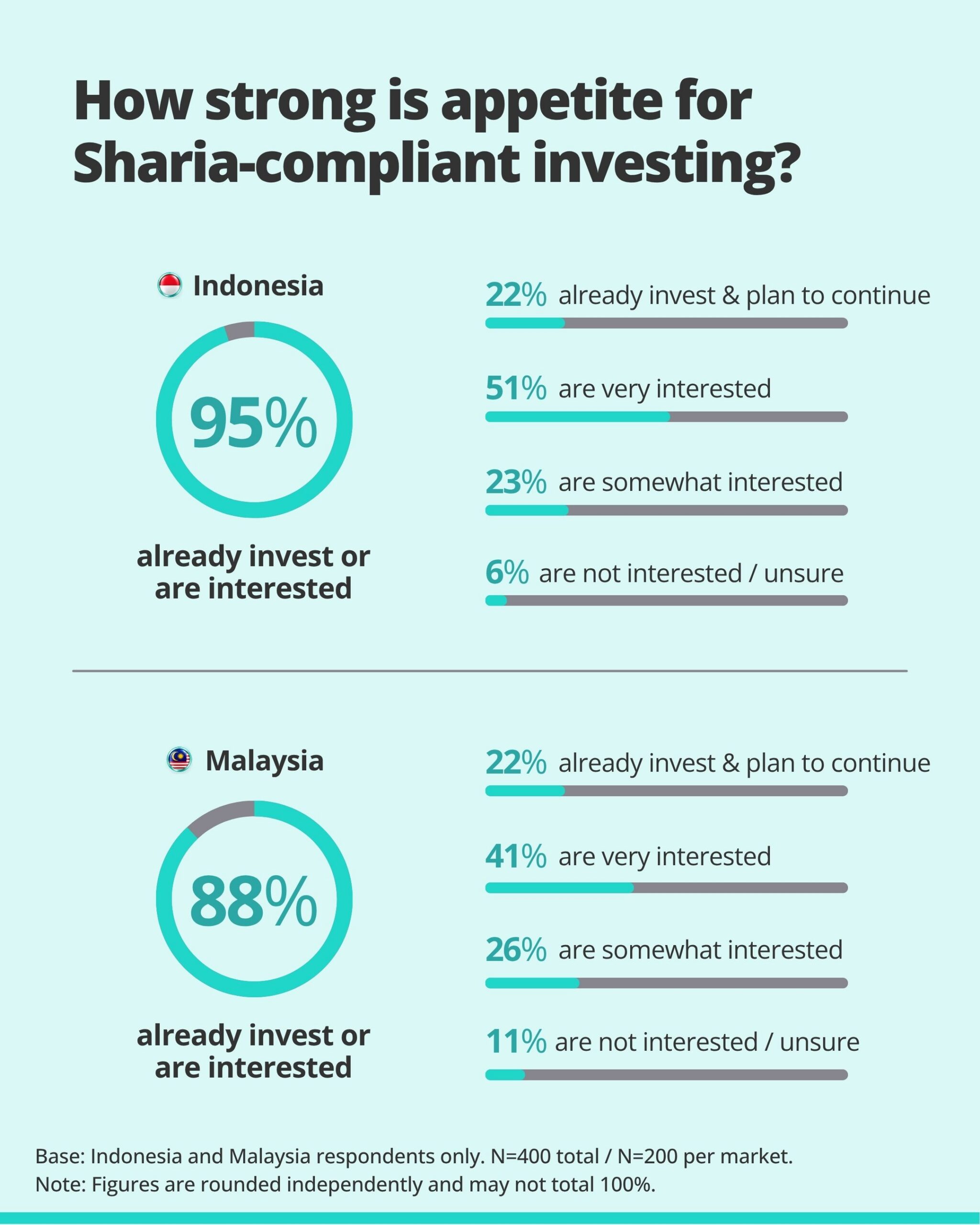
Appetite for Sharia-compliant products is high in both Muslim-majority markets, but Indonesia sets the pace: 95% of Indonesian consumers already invest in or are interested in these products, versus 89% in Malaysia.
In both markets, 22% already invest in Sharia-compliant products and plan to continue. The gap is in how strong the interest is. In Indonesia, 51% of consumers are very interested and 23% somewhat interested; in Malaysia, it’s split between 41% very interested and 26% somewhat interested.
For financial institutions, the takeaway is clear: Sharia-compliant investing isn’t a niche to be served as an afterthought. In these two markets, it’s a mainstream expectation with room to grow.
Southeast Asia’s investors are optimistic and increasingly active, but strikingly different from one market to the next, from gold in Indonesia to stocks in Singapore and crypto in Vietnam. The findings highlight the importance of tailoring products, channels and messaging to individual markets rather than treating Southeast Asia as a single investment audience.
The infographic below represents key findings from our research:

Based on a Pureprofile survey of 1,200 consumers across Indonesia, Singapore, Malaysia, Thailand, the Philippines and Vietnam (200 respondents per market), September 2026.