


Electric vehicle adoption continues to evolve across Europe, but consumer attitudes are far from uniform. While interest in EVs is growing, the factors influencing consideration, purchase decisions and ownership vary considerably from market to market.
To better understand these differences, Pureprofile surveyed nationally representative samples in the UK (1,000), Germany (1,007) and Ireland (1,011). Our research highlights a shared enthusiasm for the future of EV ownership, alongside distinct regional challenges and priorities that continue to shape consumer confidence and create barriers to wider adoption.
Electric vehicle adoption is progressing at different speeds across Europe
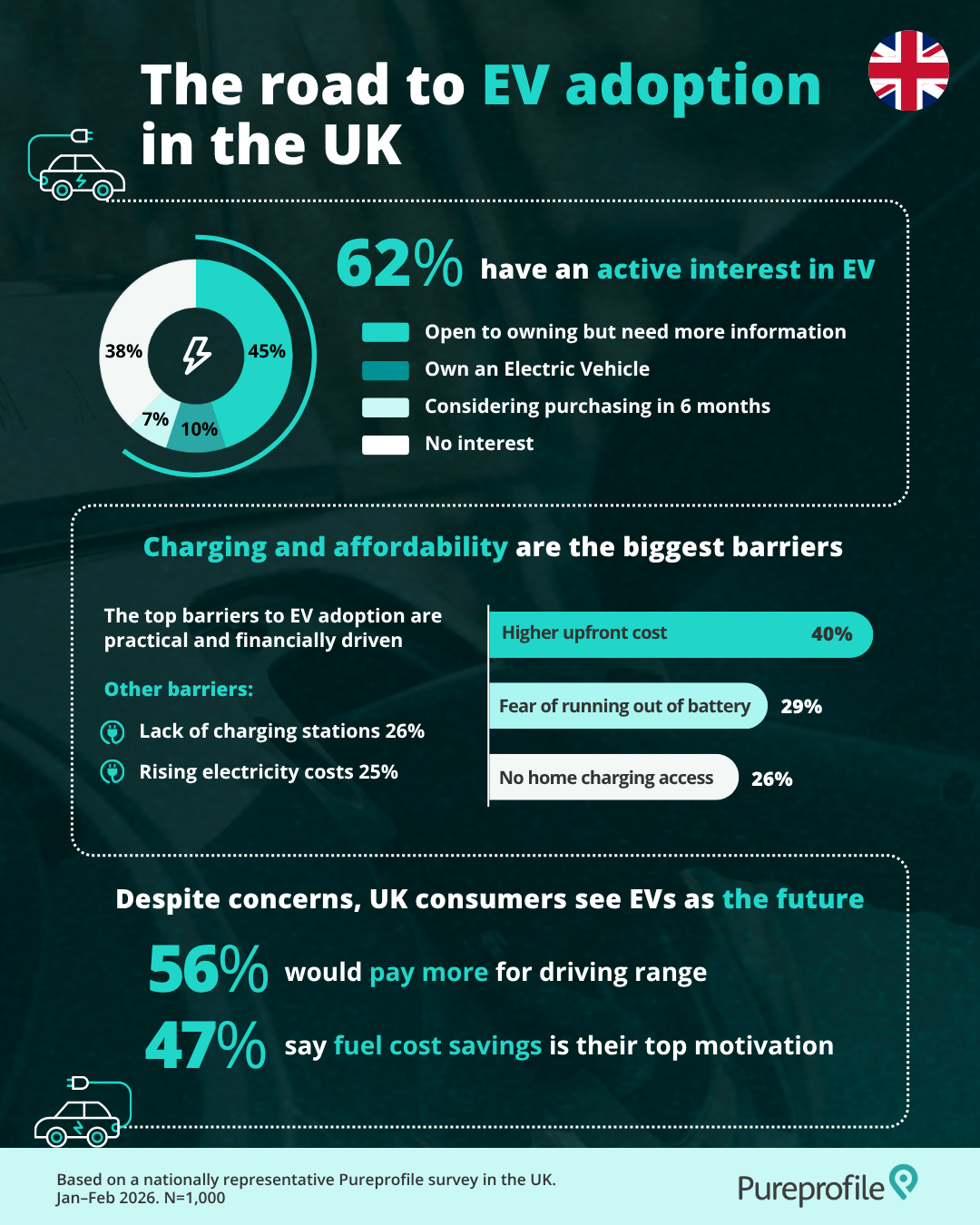
Across all three markets, there is evidence that consumers are open to owning an electric vehicle, although they are at different stages of the journey. The UK shows the highest overall level of engagement. 62% of UK consumers express an active interest in EVs. This includes those who already own an electric vehicle (10%), consumers considering a purchase within the next six months (7%), and a substantial group who are open to ownership (45%) but feel they need more information before making a decision.
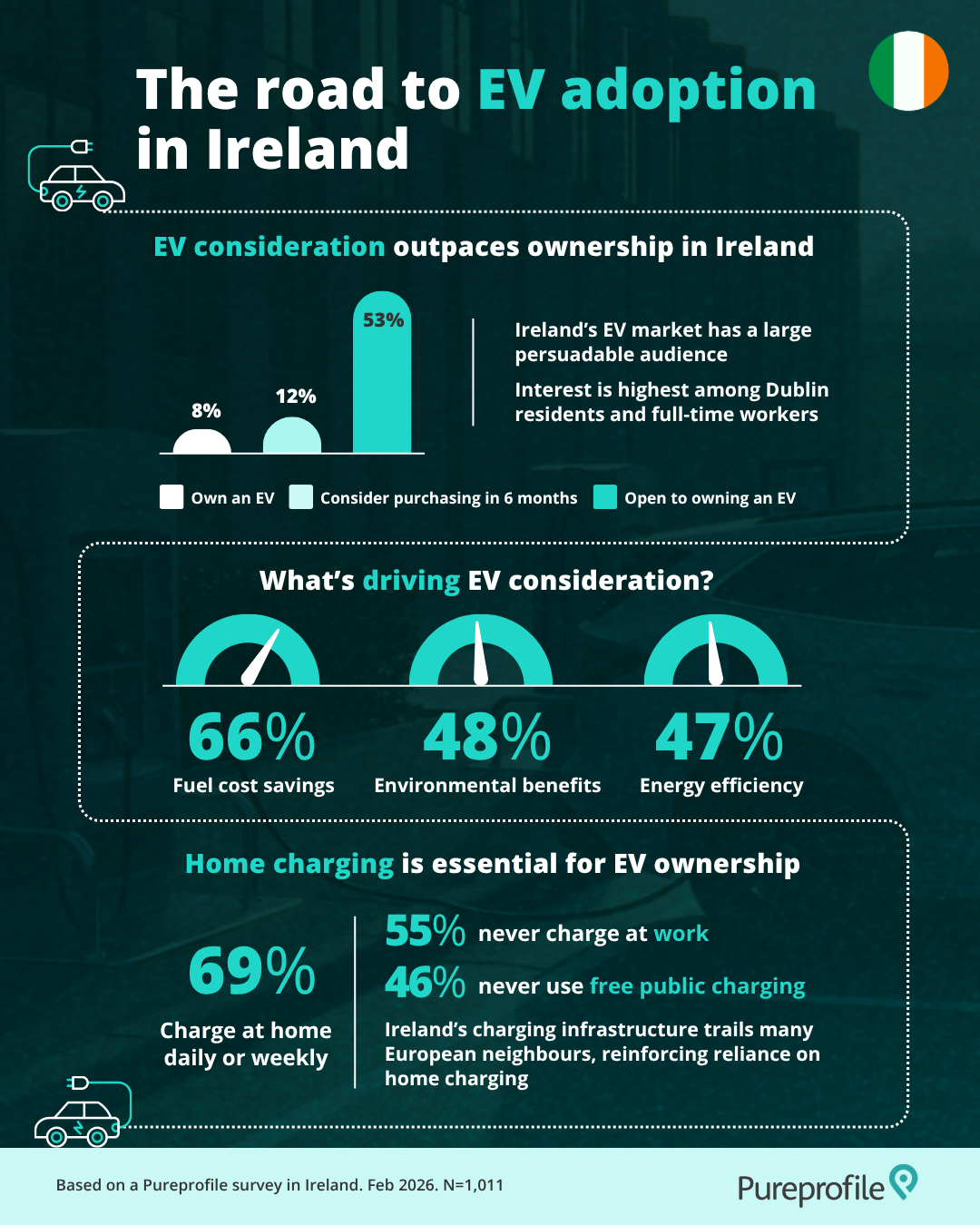
Ireland presents a similar picture. While only 8% currently own an EV and 12% are actively considering a purchase within six months, 53% of Irish consumers are open to owning an electric vehicle. The findings suggest there is a sizeable audience that is persuadable as the market matures.
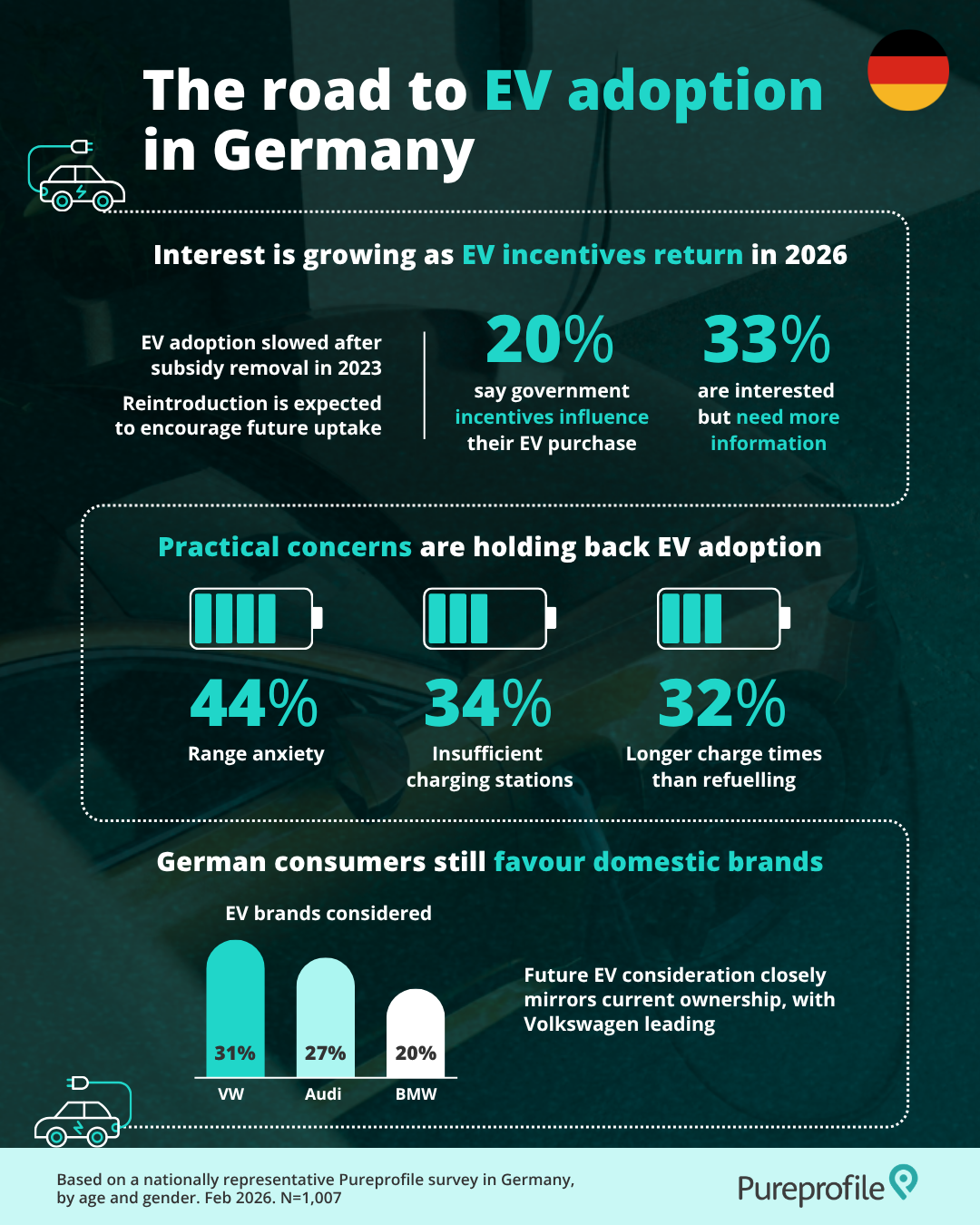
Germany’s results reveal a somewhat different dynamic. Rather than focusing on ownership levels, the data points to a market that may be entering a period of renewed consideration. 33% of German consumers say they are interested in EVs but need more information, while 20% say government incentives influence their purchase decisions.
Infrastructure and affordability are the biggest barriers
Cost remains a key challenge in the UK. 40% of UK consumers say higher upfront costs are a major barrier to EV ownership, significantly ahead of other concerns. Running out of battery (29%), lack of charging stations (26%) and no access to home charging (26%) also feature among key barriers, highlighting the range of practical considerations that continue to influence EV adoption.
People in Germany place even greater emphasis on practical limitations. 44% of German consumers say range anxiety is their biggest concern when charging an EV. Among the key barriers to EV consideration are insufficient charging stations (34%) and longer charging times than refuelling (32%). The prominence of these concerns may reflect Germany’s large geography and strong automotive culture, where consumers often prioritise vehicle performance and long-distance usability.
Ireland’s barriers closely mirror those seen in the UK, though the findings point to another important infrastructure challenge. 69% of EV owners in Ireland charge at home daily or weekly, demonstrating the central role home charging plays in EV ownership. Meanwhile, 55% never charge at work and 46% never use free public charging.
Ireland’s charging behaviours reflect a market where public infrastructure is still developing. While charging networks expanded during 2025 and further investment plans were introduced, many EV owners still rely on home charging. Improving public charging access could help build confidence among prospective buyers.
Consumers need clear reasons to switch to electric vehicles
Cost savings emerge as the most consistent motivator. In the UK, 47% of UK consumers say fuel cost savings are their primary driver for EV consideration. The importance of value is also evident in the finding that 56% of UK consumers would be willing to pay more for an EV with greater driving range, indicating a willingness to weigh long-term benefits against upfront costs.
The financial argument is even stronger in Ireland, where 66% of Irish consumers say fuel cost savings are the leading reason for considering an EV. Environmental benefits (48%) and energy efficiency (47%) also rank highly, suggesting consumers are balancing both economic and sustainability considerations.
Germany presents a slightly different picture. 34% of German consumers say environmental benefits are a key motivation for owning an electric vehicle, followed by fuel cost savings (31%). The findings suggest German consumers are balancing sustainability considerations alongside practical ownership benefits. Policy support also appears to influence decision-making, with 20% of respondents saying government incentives affect their purchase intentions, reinforcing the continued importance of incentives in encouraging adoption.
What the EV brand landscape reveals about future competition
One of the most distinctive findings from the research is Germany’s strong brand loyalty. Volkswagen is the most considered EV brand in Germany (31%), followed by Audi (27%) and BMW (20%). Future purchase consideration closely mirrors current ownership patterns, reinforcing the strength of Germany’s domestic automotive brands.
This level of brand loyalty stands apart from observations in the UK and Ireland, where brand consideration is more fragmented. In both markets, consumers are weighing a mix of established manufacturers and EV pioneers such as Tesla, BYD and Polestar. While familiar automotive brands continue to perform strongly, the breadth of brands under consideration suggests many consumers are still evaluating their options as the market evolves.
For manufacturers, the findings highlight the importance of recognising local market dynamics. While charging infrastructure and affordability may be universal challenges, consumer decision-making is still influenced by cultural and market-specific factors. The opportunity now lies in converting interest into action. Governments and local authorities can support this through continued investment in charging infrastructure and supportive policies, while brands have an important role to play in demonstrating how electric vehicles can fit seamlessly into everyday life.
The infographic series below represents key findings from our research:
Based on a nationally representative Pureprofile survey of 3,018 people in the UK, Germany and Ireland, January – February 2026.
Download the full Navigating the Electric Vehicle Landscape reports:
Also available: Electric Vehicles in Australia: Adoption, attitudes and barriers in 2026 report
Share this infographic on your website